


Venetian Plaster vs Lime Wash: Which Is Right for Your Hudson Valley Home
Updated: Sep 16

There is a question I get asked more than almost any other: should I go with Venetian plaster or lime wash? Both are lime-based, both create that soft, natural depth that Hudson Valley homeowners are drawn to, and both are a significant step up from regular paint. But they are genuinely different systems, and choosing the wrong one for your home or your budget is one of the most common mistakes I see people make after spending too much time looking at pictures online and not enough time talking to someone who actually applies these materials for a living.
Here is how I think about the difference, and how I help my clients figure out which one belongs on their walls.
The Simplest Way to Understand the Difference

One is paint. One is plaster.
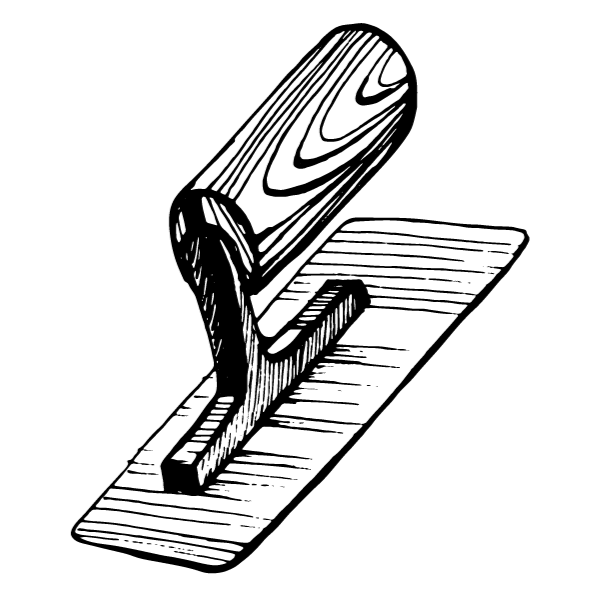
Lime wash is applied with a brush, a large block brush, the same way you would apply paint. It is a thin system. Venetian plaster is applied with a trowel in multiple layers, built up, and burnished to create depth and movement. Lime wash gives you a softer, brushstroke-driven texture. Venetian plaster gives you everything from a heavy aggregate matte finish to a high-polish marble-like surface, depending on the material and technique.
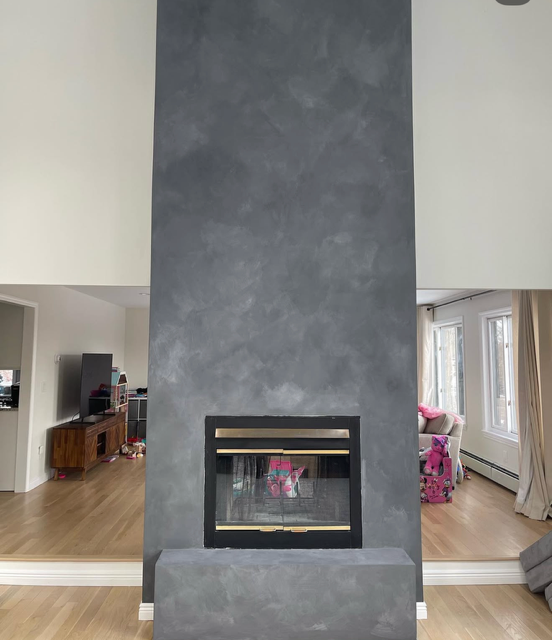
Traditionally, lime wash was used over plastered walls. It was applied on top of a plaster system to add depth and a subtle patina. It was also used in cattle barns and on foundation walls to prevent mold and bacteria. It was never originally a decorative finish in the way people think of it today. Manufacturers have since reformulated it so it can go over primed sheetrock, which makes it more accessible, but that accessibility comes with tradeoffs.
Durability: Where the Real Difference Lives
If I am being honest with my clients, and I always am, Venetian plaster wins on durability. It is a thicker system. It is built up in layers. When it goes over a plaster substrate, it becomes genuinely robust. Lime wash is thinner, more like paint, and while it looks beautiful, it can be more prone to damage over time, particularly when applied directly over sheetrock rather than a plaster base.
Whenever a client asks me to do lime wash, I always recommend running it over at least one coat of plaster first. That gives it more depth visually and more durability in practice. You get a richer finish and a longer-lasting result. If budget means we need to go straight over Level 5 sheetrock, I will do it, but I will also be honest about what that means for longevity.
Lime wash has become popular in part because it is more affordable than full Venetian plaster. That is a completely valid reason to choose it. But people should understand what they are getting: a beautiful aesthetic finish that is closer to paint in its behavior, not the durability of a full plaster system.
The Biggest Visual Difference

Venetian plaster, even in its most matte or textured form, has a depth that comes from the material itself, the way multiple layers of lime-based plaster build up and catch light differently at different times of day. You can take it in so many directions: heavy aggregate textures, soft matte surfaces, semi-polished finishes with subtle sheen, or the high-polish marble-like look that most people think of when they hear "Venetian plaster." There is genuine variety in what you can create.
Lime wash has a different quality, a softer, brushstroke-driven depth that reads almost like a patina. In rooms with good natural light, particularly with neutral colors, it is beautiful. Darker, bolder colors show more dramatically. But the techniques are limited: there is a crosshatch technique, a linear technique, and not much beyond that. You are somewhat restricted in what direction you can take the finish.
For sheer customization and variety, Venetian plaster wins every time. For a softer, more accessible natural look that sits closer to the paint end of the spectrum, lime wash is a genuinely good option.
Which One Hides Imperfections?
Neither one is a magician. I want to be clear about that. Both lime wash and Venetian plaster will telegraph whatever is underneath. They are porous systems that react to the substrate in ways that regular paint does not. If you try to patch lime wash or Venetian plaster after the fact, the original system will draw the moisture out of the fresh material and you will get discoloration and delamination at the patch. The room needs to be fully ready for a finish application before I arrive. There cannot be electricians, carpenters, or anyone else modifying the walls after the plaster is done.
That said, Venetian plaster handles minor substrate imperfections better than lime wash because it is a thicker material. It can cover small variations in the wall surface in a way that a thin lime wash coat cannot. But neither one will cover cracks that need structural repair, or walls that are not properly prepared. Surface prep determines everything in plaster work. The more sheen in the finish, the more critical the prep becomes, because everything telegraphs through a high-gloss surface.
Which One Is Right for Your Hudson Valley Home?
The most common mistake I see Hudson Valley homeowners make is locking onto a finish after looking at photos online and then arriving at the project without understanding whether that finish actually makes sense for their walls, their substrate, and their home's behavior.
I have had clients who wanted Tadelakt on a second floor that was still settling. I have had clients who wanted plaster on wood doors. Lime-based materials and wood do not mix well because wood expands and contracts with moisture, and lime has a lot of water in it. These are things that only come up when you actually talk through a project, look at the space, and think about what the home is doing structurally.
My advice is always the same: come with an open mind, share your photos, and let us have a conversation about what actually makes sense for your home. You might end up exactly where you started, with the finish you saw online. Or we might find a better option, something more durable, more appropriate to your walls, or more interesting than what you originally had in mind.
If you are weighing Venetian plaster and lime wash for a project anywhere in the Hudson Valley, I am happy to walk you through it. That conversation is always the best starting point.
Comments